

Beyond the Facts: What the Gerry Spence Method Changed About the Way I Try Cases
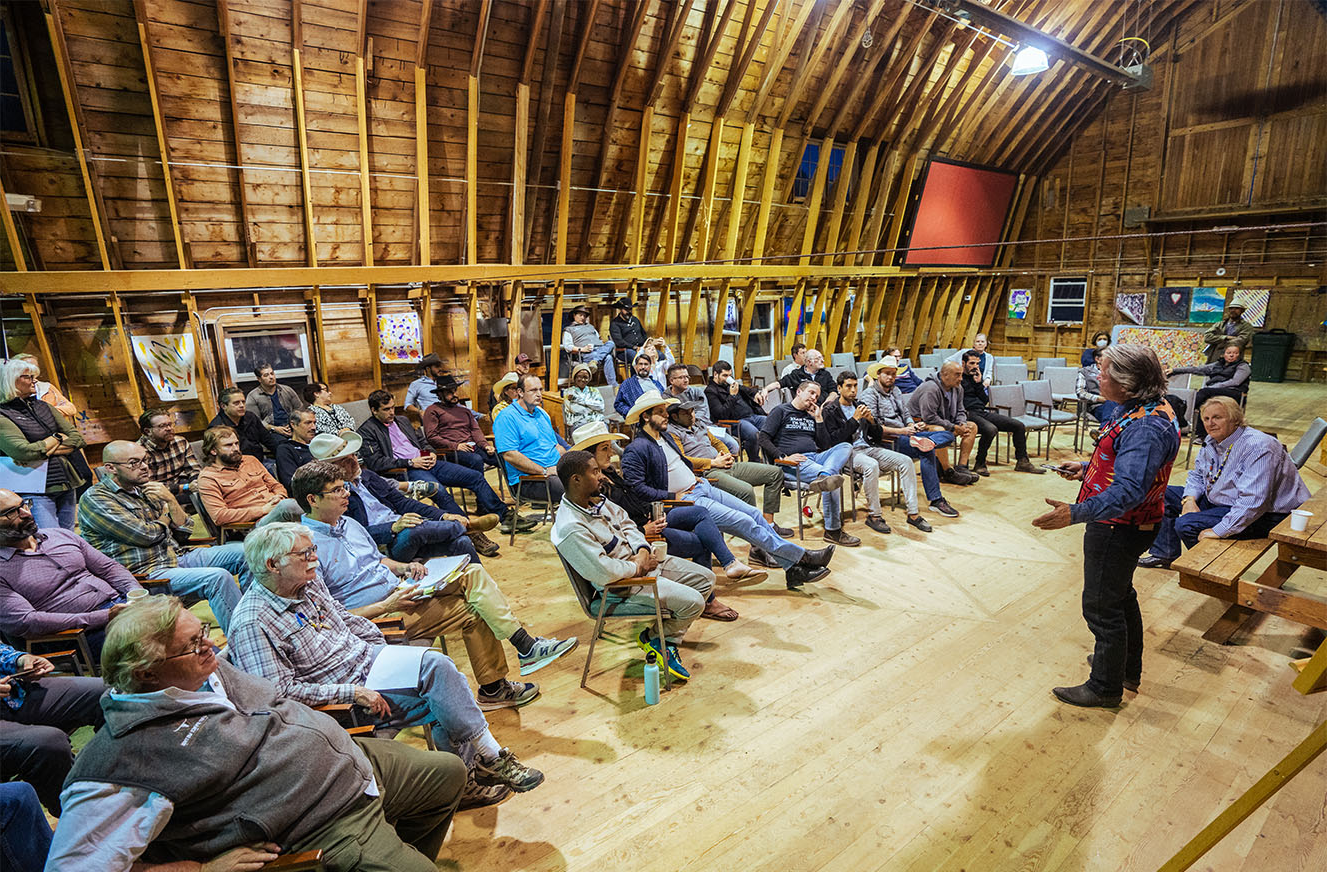
In August 2026, I completed the Gerry Spence Method Trial Skills Workshop at Thunderhead Ranch in Dubois, Wyoming. It was not simply another trial-advocacy seminar. For three weeks, the work forced me to examine something more fundamental: how a lawyer comes to understand another human being’s story, how we discover what a case is truly about, and how we communicate that truth to the people who will ultimately decide it. The experience changed the way I think about trying cases.
A Case Is About More Than What Happened
Lawyers are trained to reduce disputes to elements, causes of action, defenses, documents, and admissible evidence. Those things matter and are indispensable to the work, but they are not the whole case. Behind almost every serious dispute is a human experience: a promise somebody relied upon, trust that was violated, a home or livelihood placed at risk, work that went unpaid, a relationship that fractured, or an institution whose decisions had consequences for an individual person.
The Gerry Spence Method begins with the discipline of understanding that story. Before asking how to persuade a jury, the lawyer must first understand the client—not simply what happened to the client, but what the experience meant to that person. That requires listening differently, approaching the case with genuine curiosity, and being willing to confront facts that may be uncomfortable. It also requires resisting the temptation to impose a polished legal narrative before truly understanding the person whose case has been entrusted to the lawyer.
Truth Before Technique
One of the most significant lessons I brought home from Thunderhead Ranch is that effective trial advocacy is not primarily about performance. It is about truth. Jurors are constantly evaluating whether they believe the people speaking to them, and they bring their own experiences, fears, values, relationships, disappointments, and sense of fairness into the courtroom.
A lawyer cannot manufacture genuine connection with jurors through slogans or courtroom theatrics. The better approach is to know the case deeply enough—and to know the client deeply enough—that the lawyer can speak plainly about what happened, what is difficult about the case, what matters, and why. That also means acknowledging weaknesses rather than hiding from them, allowing witnesses to be human instead of turning them into scripted performers, and trusting jurors enough to listen to them rather than treating jury selection as an exercise in finding people who will simply agree with the lawyer.
Listening to the Jury
The training at Thunderhead also changed the way I think about voir dire. Traditional jury selection can sometimes sound as though the lawyer is trying to determine what he needs to tell the jury. The more important question may be what we need the jury to tell us.
Jurors come into the courtroom with beliefs and life experiences that affect how they will hear a case. The lawyer’s job is not to manipulate those beliefs, but to create an environment in which people are willing to speak candidly about them. That means asking real questions and being willing to hear answers we may not like. A meaningful voir dire is therefore less about selecting an audience and more about forming a group of people with whom an honest conversation about the case can occur.
Finding the Story Beneath the Evidence
Cases can contain thousands of pages of contracts, emails, financial records, photographs, reports, text messages, deposition transcripts, and exhibits. The jury should not have to perform the lawyer’s work of determining why those materials matter. Our responsibility is to discover the human story that connects them.
That often means asking questions that go beyond the documents themselves. Who trusted whom? What promise was made? What did someone believe would happen? When did things begin to change? Who had the power to prevent the harm, and what was ultimately lost? Those questions can be important in a dispute involving a homeowner, contractor, lender, business owner, consumer, or virtually anyone else who finds himself or herself in a courtroom. The legal issues and evidence will differ from case to case, but human beings still make the decisions.
The Client’s Story Is Not the Lawyer’s Story
Perhaps the most important discipline is remembering whose case it is. It is easy for a lawyer who has lived with a lawsuit for months or years to begin thinking about the case primarily in terms of pleadings, depositions, motions, experts, deadlines, and trial strategy. The client, however, experienced something entirely different.
Our responsibility is to bridge those two worlds. We must know the law and the evidence, and we must prepare relentlessly, but we must never allow the mechanics of litigation to bury the reason the case exists in the first place. At trial, the lawyer should not replace the client’s story with his own. The lawyer’s role is to understand that story well enough to help reveal it clearly and truthfully.
Voir Dire, Opening, Examination, and Closing Are Parts of One Story
At Thunderhead Ranch, the work included voir dire, opening statement, direct examination, cross-examination, closing argument, case preparation, storytelling, and intensive trial exercises. I came away seeing those disciplines less as separate courtroom techniques and more as different parts of one continuing conversation.
Voir dire begins the relationship with the jury. Opening allows the jury to enter the story. Direct examination gives the people who lived the events an opportunity to explain what happened, while cross-examination tests whether the opposing version of those events can withstand scrutiny. Closing then asks the jury to bring its own judgment, experience, and conscience to the evidence it has heard.
When those pieces are disconnected, a trial can feel like a sequence of legal presentations. When they arise from a genuine understanding of the case and the people involved, they can instead become one coherent human story.
Preparation Still Matters—Perhaps More Than Ever
None of this diminishes the importance of rigorous legal preparation. In many ways, the opposite is true. Authenticity without preparation is not advocacy. A lawyer must know the documents, testimony, governing law, weaknesses, contradictions, damages, defenses, and evidentiary problems of the case.
That level of preparation creates the freedom to stop hiding behind notes and legal terminology and actually listen to what is happening in the courtroom. It allows a lawyer to respond to the witness rather than simply move to the next prepared question, to hear what the jury is communicating, and to let the story of the case emerge from the evidence rather than forcing a predetermined narrative onto it.
Bringing the Work Home to Houston
Completing the Gerry Spence Method at Thunderhead Ranch was not an endpoint. It was the beginning of a different way of approaching my work. I returned to Grosu Law Firm with a renewed commitment to understanding the people I represent, identifying the human truth at the center of their disputes, listening more carefully, preparing more deeply, and presenting cases in a way that allows judges and jurors to understand not only what happened, but why it matters.
Grosu Law Firm represents individuals and businesses in serious civil disputes, including commercial, construction, real estate, consumer, and other complex litigation. Whatever the caption of the lawsuit may say, however, every case ultimately belongs to a person. Before we can effectively tell that person’s story, we have to earn the right to understand it.

.jpg)